Is your media start-up shaped for success?
Building a strong media project today requires more than a good idea. It demands editorial vision, technological relevance, and a clear understanding of audiences and sustainability. MEDIA LOVES TECH is designed to help you test whether your project is ready for that challenge.
MEDIA LOVES TECH identifies and supports innovative digital ideas that aim to strengthen quality journalism. It offers a structured space to question assumptions, assess feasibility, and refine concepts before moving to market.
Launched by DW Akademie, Deutsche Welle’s center for journalism training and international media development, the program is open to journalists, media entrepreneurs, start-ups, developers, designers, creative professionals, and civil society actors who want to improve media in Morocco and Tunisia through innovation.
Selected projects benefit from an incubation journey that combines learning, expert feedback, and experimentation. At the end of the process, the most promising digital journalism innovation across Morocco and Tunisia will receive an award of EUR 10 000 to support its next stage of development.
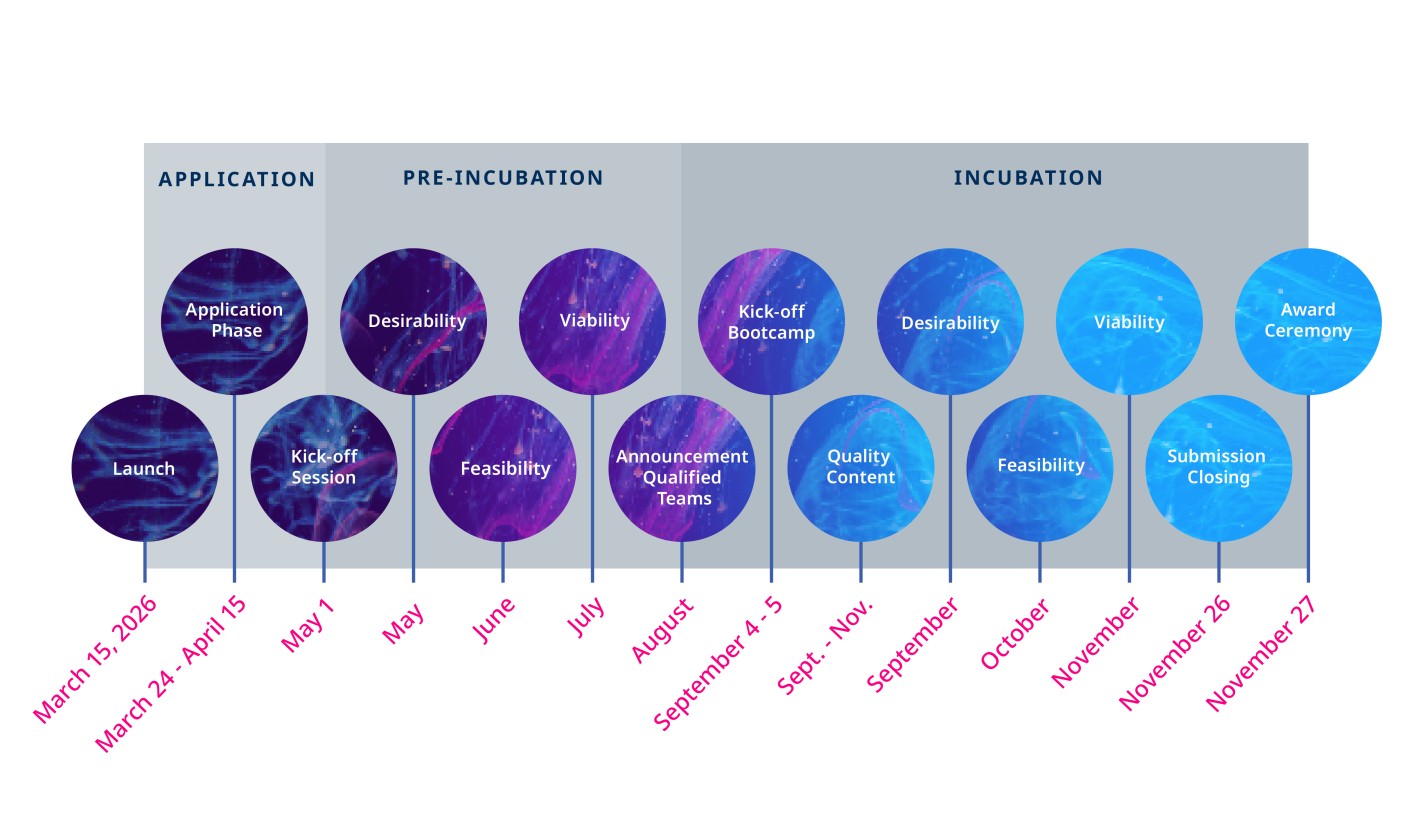
Stages of the competition
Objective of the competition
MEDIA LOVES TECH aims to identify and support practical, innovative solutions that respond to the real challenges facing media and journalism in Morocco and Tunisia.
The program leverages the power of collective intelligence by bringing together diverse profiles — journalists, technologists, designers, and media entrepreneurs — to explore new ideas, services, and formats. By encouraging collaboration and shared problem-solving, MEDIA LOVES TECH creates the conditions for creativity, relevance, and innovation to emerge.
Beyond idea generation, MEDIA LOVES TECH offers participants the opportunity to enter the world of media entrepreneurship, test their assumptions in real conditions, and prepare their projects for market launch. It is a space to experiment, learn, and turn promising concepts into viable media solutions.
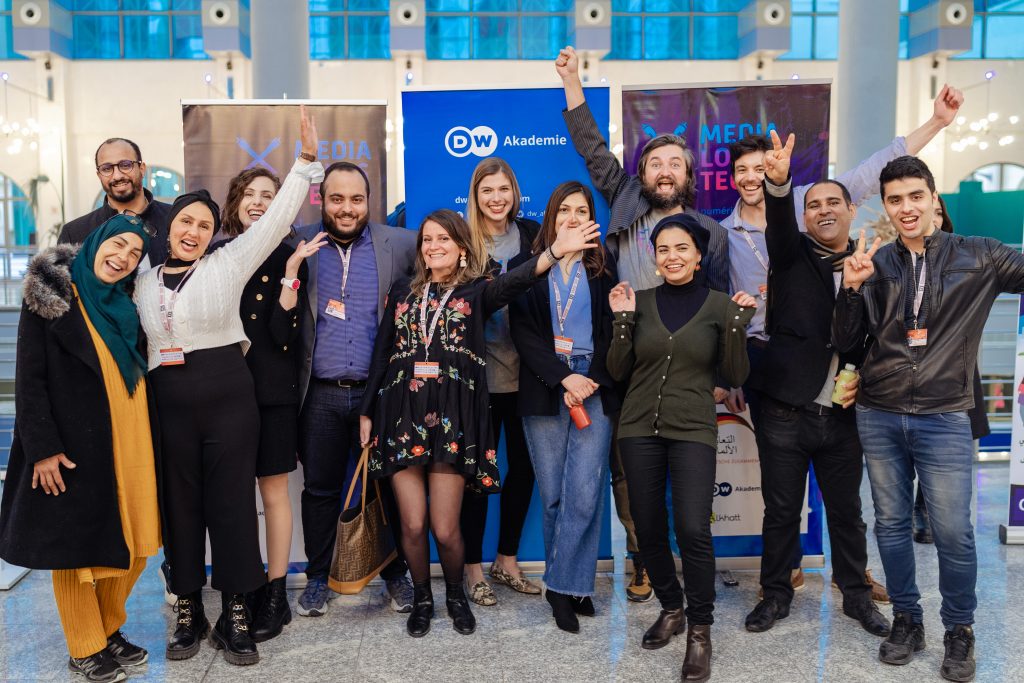
The MEDIA LOVES TECH team and participants at the Journalism Forum 2022 in Tunis. Credit: Gorilla Hub
Projects we are looking for
MEDIA LOVES TECH seeks projects that contribute to stronger, more relevant, and more accessible journalism.
We are particularly interested in:
- Solutions that improve access to information for diverse audiences;
- Tools that support and optimize journalistic work, including data processing, organization, analysis, and visualization;
- Innovations that strengthen interaction with audiences, such as tracking, audience measurement, engagement, and feedback mechanisms;
- Creative approaches to new editorial formats and storytelling.
This list is not exhaustive. We encourage bold, inventive proposals that explore new ways to serve journalism and the public interest.
Key Thematic Areas
MEDIA LOVES TECH is open to projects that address some of the most pressing challenges facing journalism today. In particular, we welcome initiatives working in the following areas:
- Science journalism
Solutions that help journalists improve the coverage of scientific topics, make complex information accessible to wider audiences, and ensure effective dissemination of reliable scientific knowledge. - Citizen journalism
Tools that enable media to reach specific audiences — such as local communities — and connect citizen journalists with professional newsrooms, expanding both production capacities and audience reach. - Content verification and the fight against disinformation
In fragile political contexts, especially during elections or periods of crisis, distinguishing verified information from misinformation is increasingly difficult. We are interested in tools that support fact-checking, provide context, and strengthen editorial rigor in Tunisia, Morocco, and Algeria. - Election coverage
As electoral periods approach, media require dedicated tools to ensure accurate, ethical, and comprehensive coverage of political processes. - Data journalism
Technologies and solutions that help media analyze, process, interpret, and visualize data to produce deeper, evidence-based journalism. - Media viability
Innovative tools and models that contribute to the economic and financial sustainability of media projects. - Dialogue with public authorities
Solutions that promote transparency in public action and facilitate constructive dialogue between citizens, journalists, and political or economic decision-makers. - Information in times of crisis
Tools that support the dissemination of essential public information and help audiences navigate health, environmental, economic, or political crises. - Harnessing new technologies
Advances in artificial intelligence and emerging technologies offer significant opportunities for newsrooms. The challenge is to use them responsibly and strategically in service of quality journalism. We are keen to explore innovative ideas that do exactly that.
What’s in store for you?
Stage 1: Application and qualification phase
In 2026, MEDIA LOVES TECH will train a ‘North Africa’ cohort, which will bring together teams from Morocco and Tunisia.
Apply by 19 April 2026 using the SMART MEDIA ACCELERATOR 2026 application form. The best teams will receive notification that they have access to the SMAx e-learning platform.
Stage 2: Pre-incubation journey
From May to July 2026, teams have the opportunity to take online courses and sessions on the platform and provide the necessary deliverables. The three-months pre-incubation journey is divided into three phases: “user desirability”, “technical feasibility” and “business viability”. At the end of this first journey, the deliverables are evaluated and the best projects are continuing the competition.
Stage 3: Incubation journey
Before starting the incubation stage, the cohort will attend an online bootcamp moment.
Then, from September to November 2026, teams have the opportunity to have tailored and personalised coaching and mentoring via the “Experts on-demand” sessions and the available online courses and sessions. The three-months incubation journey is divided into the three same gates as for the pre-incubation stage: “user desirability”, “technical feasibility” and “business viability”. At the end of every gate, a strict assessment of the deliverables and the team progress is conducted ahead of continuing the incubation journey.
The pre-incubation phase is followed by a three-month incubation journey. From September to November 2026, this phase introduces an iterative approach, organized around three successive phases turned to gates:
- Desirability: clarifying the problem, users, and value proposition;
- Feasibility: assessing technical and operational assumptions;
- Viability: testing business logic and sustainability.
At each gate, teams:
- refine their hypotheses,
- test them against feedback and expert input,
- submit concrete deliverables for review.
Progression through the program is driven by this build–test–learn cycle, supported by one-to-one, tailor-made expert sessions on demand, adapted to the specific challenges of each project.
At the end of the incubation journey, final deliverables are evaluated and the most promising project is selected.
During the incubation stage, each team achieving a gate will receive EUR 500. The best project will receive EUR 10,000 in funding, which will be awarded to the winning team at the closing ceremony on 27 November 2026.
What MEDIA LOVES TECH offers
- A flexible, iterative learning journey combining online courses and masterclasses;
- On-demand access to experts in journalism, technology, and design;
- Ongoing feedback loops at every stage of development;
- A community of media entrepreneurs and practitioners.
In 2026, the best project will be awarded EUR 10,000 in funding at the closing ceremony on 27 November 2026.
Rules and Regulations
The complete regulations of MEDIA LOVES TECH 2026 edition can be consulted here. You may also refer to the Frequently Asked Questions (F.A.Q.). Should you still have any questions at this stage, feel free to contact us.
The SMART MEDIA ACCELERATOR is an initiative of the DW Akademie, Deutsche Welle’s center for international media development, journalistic training and knowledge transfer, in cooperation with the Tunisian media NGO Al Khatt. Al Khatt aims to be a think tank and a space for reflection on the future of journalism in the Internet age.
This program is funded by the European Union, the German Federal Ministry for Economic Cooperation and Development (BMZ).